

You may come to Corbett for the tiger, but at Paatlidun, the tiger is only where the story begins. Look closer, and another story reveals itself in the stone beneath your feet, the blue of a doorway, the light through a mori, the hand-finished walls and the name outside your villa. This is Tradition Beyond Tiger, a journey into the details shaped by Kumaon, where the warmth of tradition meets contemporary luxury.
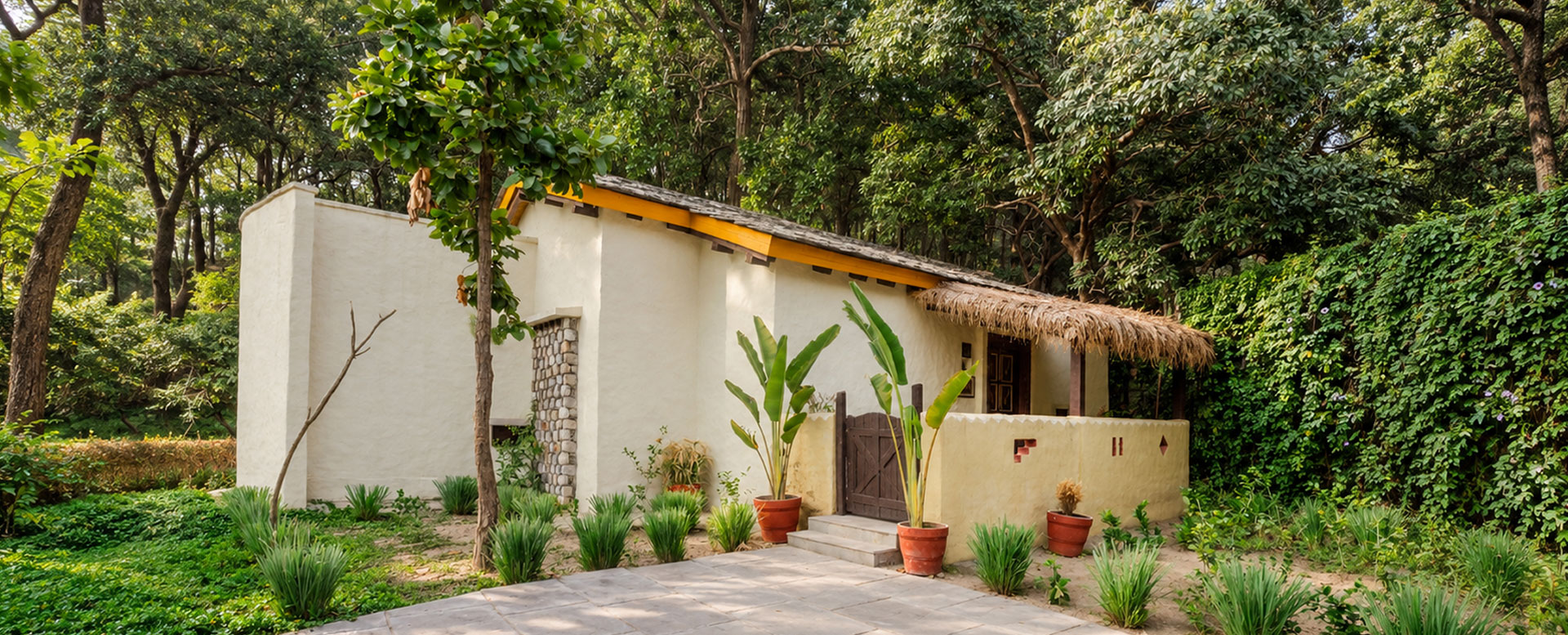
Paatlidun is deeply rooted in the landscape of Kumaon, with architecture inspired by traditional homes shaped by the land, the climate and generations of living close to nature. Sloping roofs, patthar-inspired surfaces and grass-influenced roofing give the property its warm, earthy character.
Nothing feels added simply for decoration. The materials, forms and textures reflect the visual language of homes that have belonged to these hills for generations. From the natural finishes to the way the structures sit within the landscape, every detail feels connected to its surroundings.
The result is architecture that does not try to recreate Kumaon as a theme, but carries its spirit naturally, allowing the property to feel as though it has always belonged here.
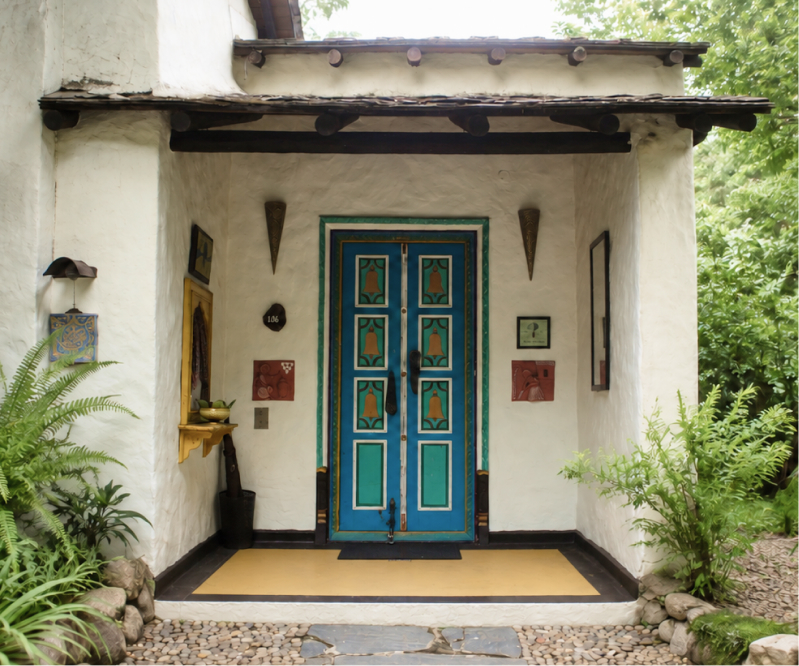
In traditional homes across Uttarakhand, the kholi is the main entrance, the threshold that separates the outside world from the sanctity of home.
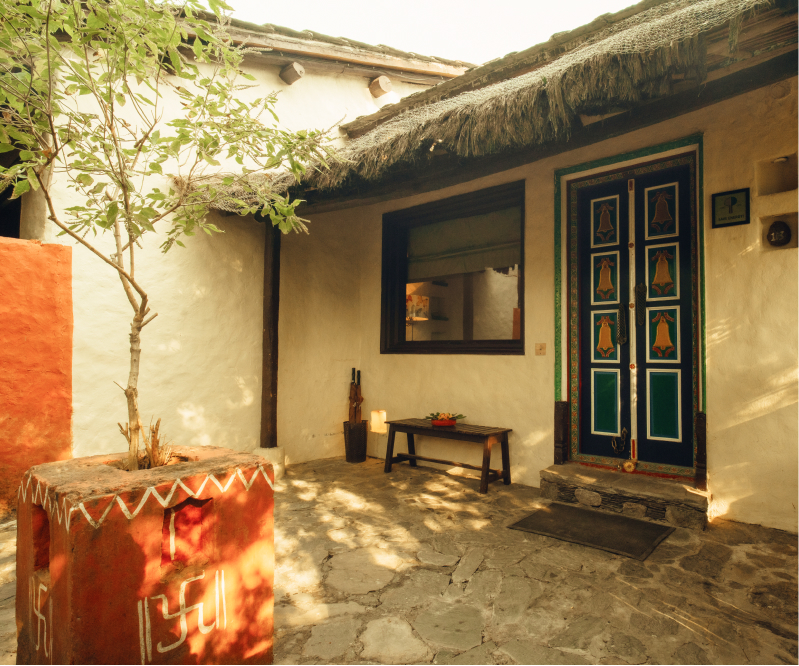
At Paatlidun, the kholi carries the familiar blue tones and colourful artistic detailing associated with Kumaoni homes. But its meaning goes beyond its appearance.
There is an old belief that the home is like a temple, and entering it is an act of respect. That is why the doorway sits slightly low, asking you to bend a little as you step inside.
It is a small gesture, almost instinctive, but one that makes you pause. Before you enter the villa, the kholi quietly reminds you that you are not simply walking into a room, but into a space shaped by tradition, reverence and a deep sense of home.
Beyond the doorway, the feeling begins to change. A deep blue base, brought alive with colourful hand-painted detailing, gives the entrance the character of traditional Kumaoni homes.
Even the act of entering carries meaning. The doorway is intentionally low, asking you to bend slightly as you step inside, a quiet reflection of the belief that a home is sacred, almost like a temple, and should be entered with humility and respect.
The courtyard then opens into a warm, familiar space. A Tulsi plant sits quietly within it, bringing a sense of everyday life, reverence and belonging.
There is no rush here, only open space, fresh air and the feeling of having arrived somewhere that understands the meaning of home.
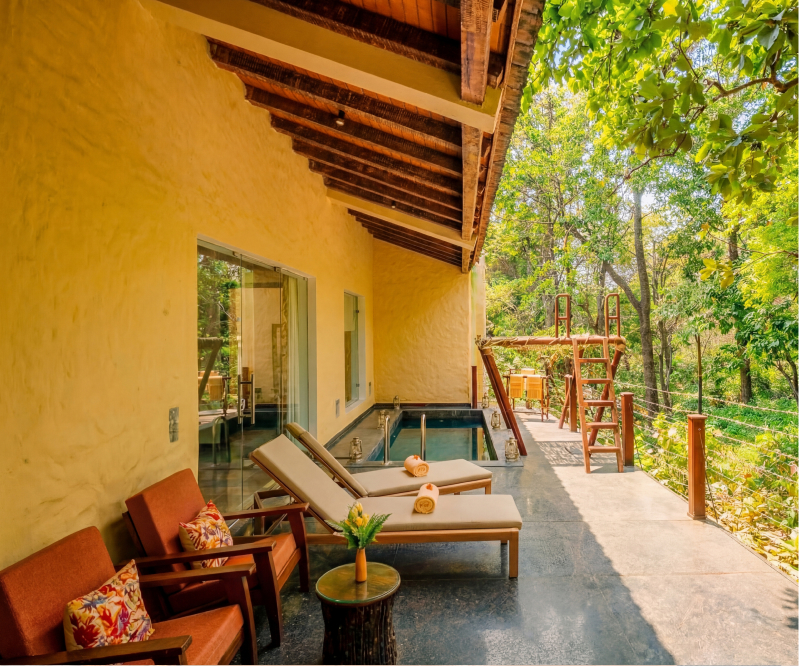
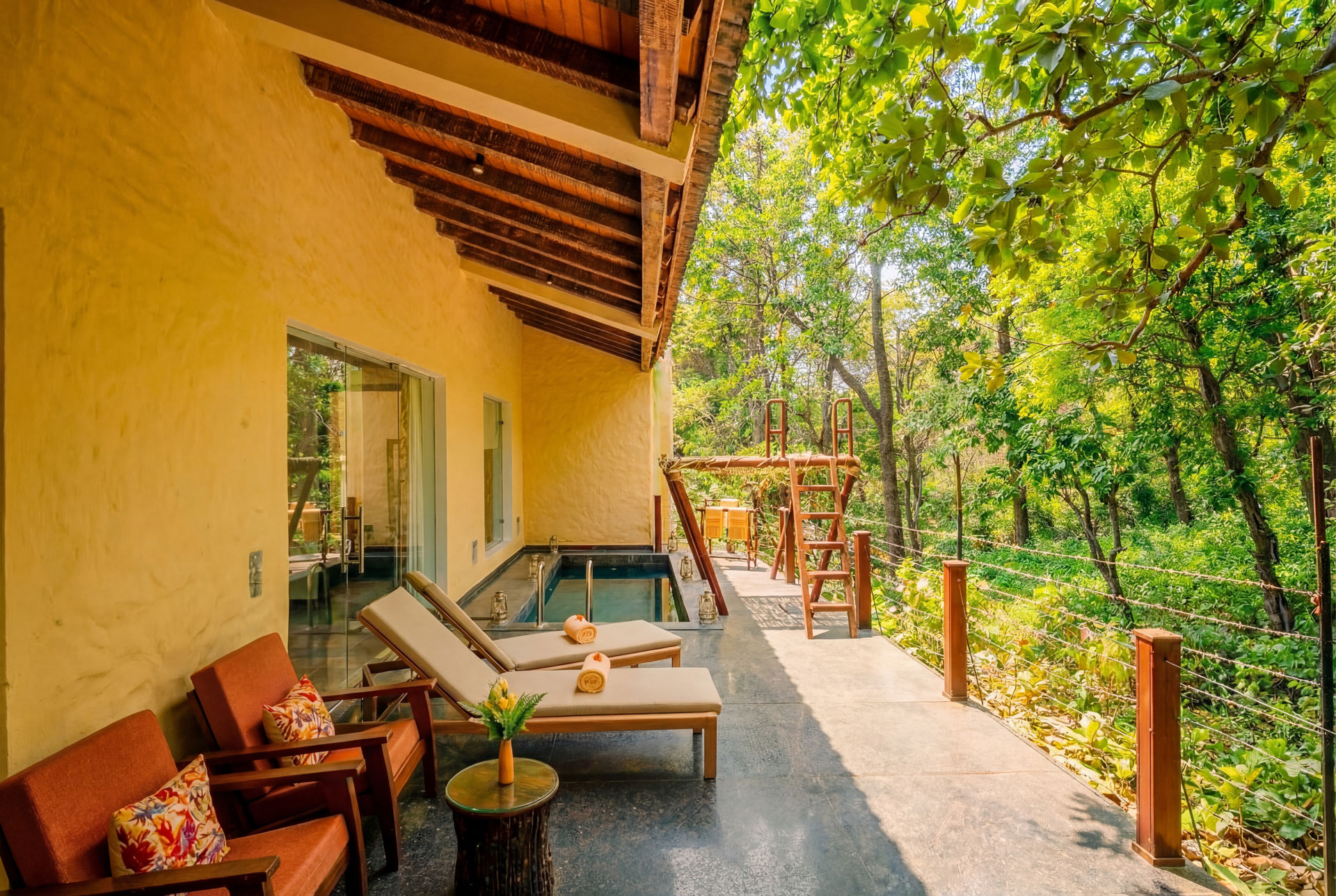
From the courtyard, your villa begins to unfold into a space designed around privacy, comfort and room to breathe. A private backyard, a quiet sit-out, a cosy living area, a spacious bedroom and a generous bathroom come together to create a stay that feels open and unhurried.
Even the distance between villas is intentional. Each one is thoughtfully positioned to give you a greater sense of seclusion, allowing privacy to come naturally without making you feel disconnected from the landscape around you.
Here, luxury is not only about what fills the space, but also what surrounds it: openness, silence, greenery and the freedom to slow down.
Because sometimes, the greatest luxury is not what you add to a space, but the space you leave around it.
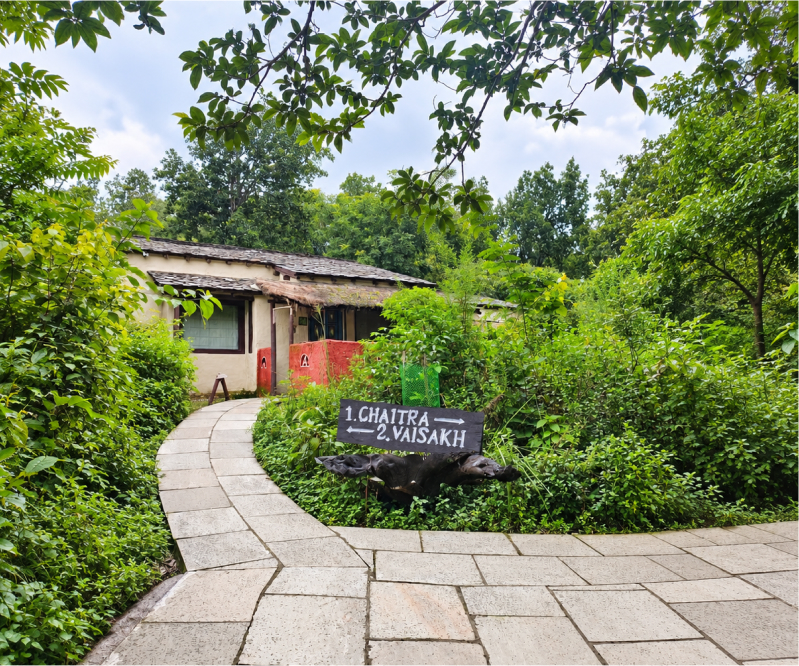
At Paatlidun, you do not simply stay in a numbered room. Each villa is named after one of the twelve traditional lunar months, with names such as Baisakh, Jyeshtha, Ashaadh and Phalgun.
A number tells you where you are staying; a name gives the place a memory. Years later, you may not remember a room number, but you may still remember, "We stayed in Ashaadh."
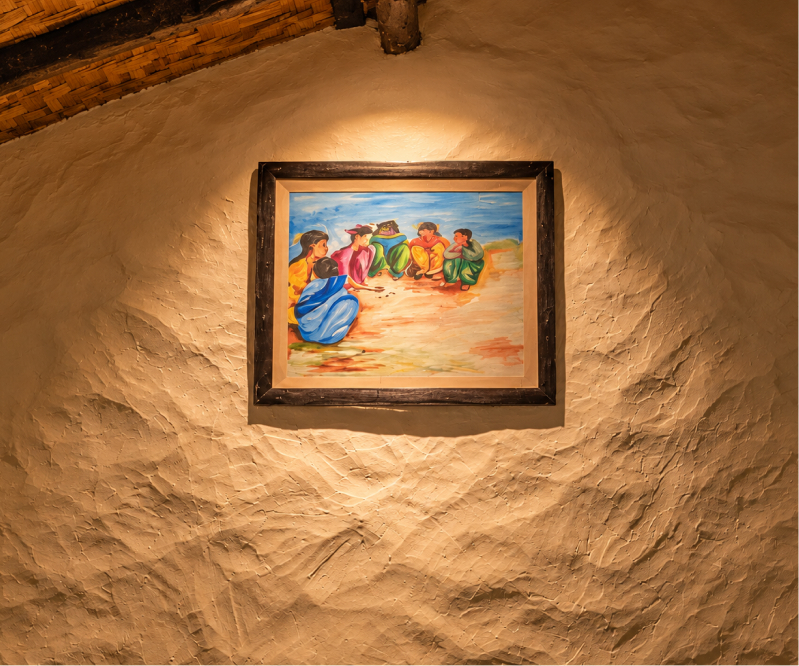
The story continues inside. Each villa carries artwork inspired by the month it is named after, giving every space its own visual identity and character. Ashaadh tells one story, Phalgun another.
It is a thoughtful detail that makes every villa feel a little different, a little more personal, and far more memorable than simply a place to stay.
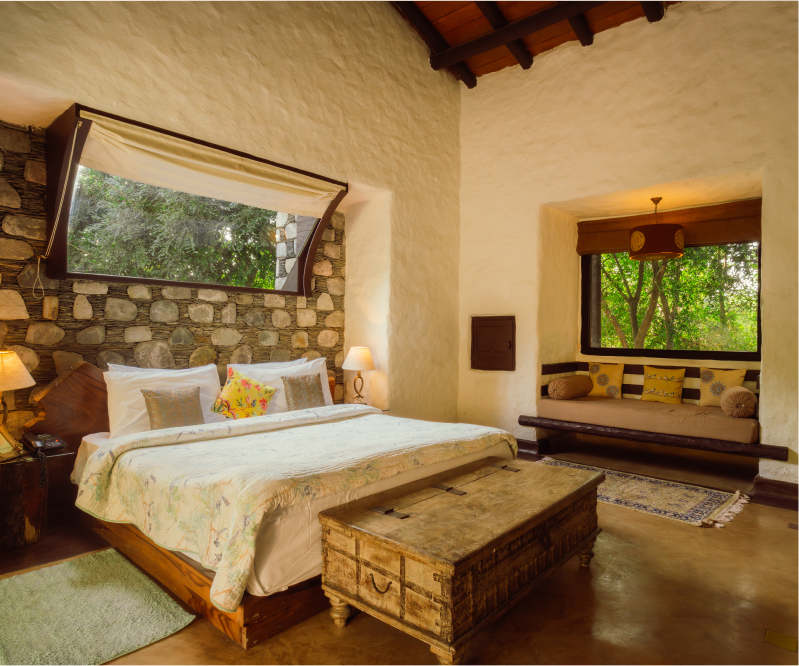
As you settle into your villa, look towards the window. What may look like a bay window today has an older Kumaoni identity: the mori.
Traditionally, the mori formed an important part of the home, allowing natural light to enter while opening the interiors towards the landscape outside. More than just a window, it created a gentle connection between the home and its surroundings.
At Paatlidun, this architectural detail has been carried forward in a more contemporary form. The idea remains rooted in tradition, while its scale, comfort and interpretation have evolved for the modern guest.
It is a simple detail, but one that says a lot about the way Paatlidun is designed: preserving the character of Kumaon while allowing it to live naturally within a luxurious stay.
Look closely at the walls and you will notice a finish that feels distinctly different from the polished surfaces of a conventional hotel.
The wall structure at Paatlidun has been designed in a lipai-inspired style, drawing from the traditional hand-finished surfaces seen in Kumaoni homes. The uneven textures and earthy character are intentional, giving the space a more natural and lived-in quality.
Rather than recreating the technique exactly, Paatlidun interprets its visual language within a contemporary setting, allowing tradition and comfort to sit together effortlessly.
It is this subtle imperfection that gives the walls their character. They feel tactile, grounded and connected to the region.
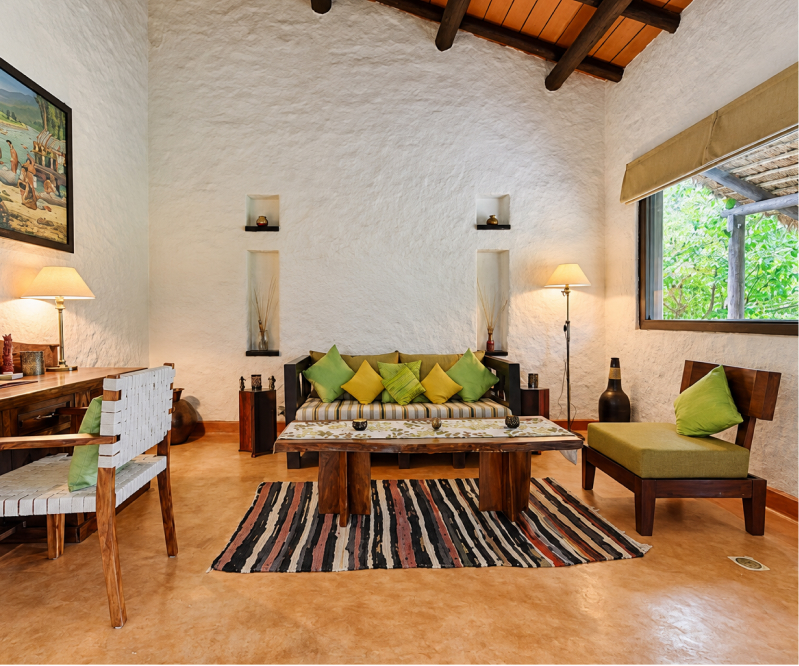
The floors at Paatlidun carry a story of craftsmanship rooted in a very ancient flooring art from Italy, which later travelled to Sri Lanka and Kerala, evolving across regions while retaining its handcrafted character. The technique creates a jointless cemented surface that is designed to be waterproof and traditionally involves natural ingredients such as vegetables, pulses and egg as part of its preparation.
At Paatlidun, this distinctive flooring can be experienced across the Premium Luxury Villas, Luxury Villas and Jungle Villas with Jacuzzi, with the same artistic treatment also extending to the toilet walls in selected categories.
Instead of conventional marble or polished flooring, the finish feels seamless, tactile and individually crafted, bringing an age-old artistic technique into a contemporary luxury setting while giving each space a character that feels both refined and distinctive.
Wood has always been an important part of traditional Kumaoni homes, shaping everything from doors and windows to furniture and decorative details.
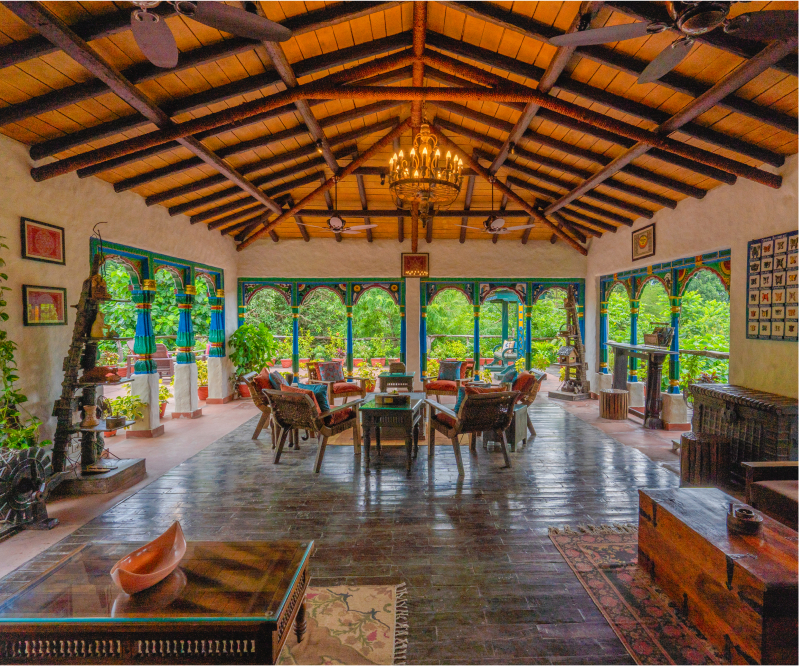
At Paatlidun, that connection continues through predominantly wooden furniture, handcrafted pieces and carved elements that draw from the visual language of Kumaon and the wilderness around Corbett. The natural grain, warm tones and individual detailing give each piece a character of its own.
Nothing feels mass-produced or disconnected from its surroundings. Instead, the furniture becomes part of the larger story of the space, sitting naturally alongside stone, earthy textures and views of the forest outside.
It is where craftsmanship meets comfort, and where the character of Kumaon finds a contemporary expression.

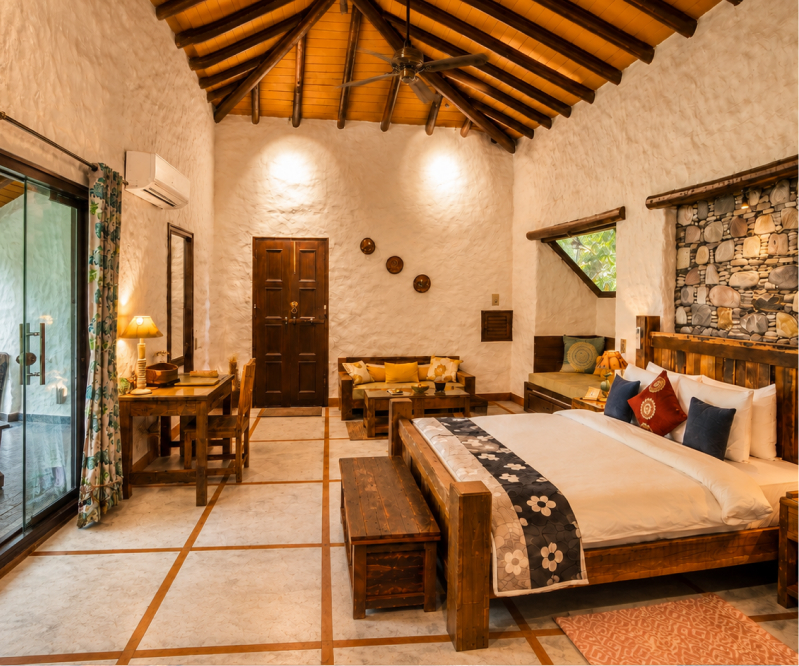
Just when the space has drawn you into the traditions of Kumaon, another side of Paatlidun begins to reveal itself: contemporary luxury.
Private pools, Jacuzzis, spacious bedrooms, generous bathrooms and thoughtfully designed living spaces bring an unmistakable sense of indulgence to the stay. Every comfort feels considered, yet none of it takes away from the character of the place.
That contrast is what defines Paatlidun. The earthy textures, traditional details and regional influences remain at the heart of the experience, while modern comforts make the stay effortless.
It is not about choosing between tradition and luxury.
It is about experiencing both, together: the old and the new, the rooted and the refined, living naturally within the same space.
At Paatlidun, no two stays have to feel the same.
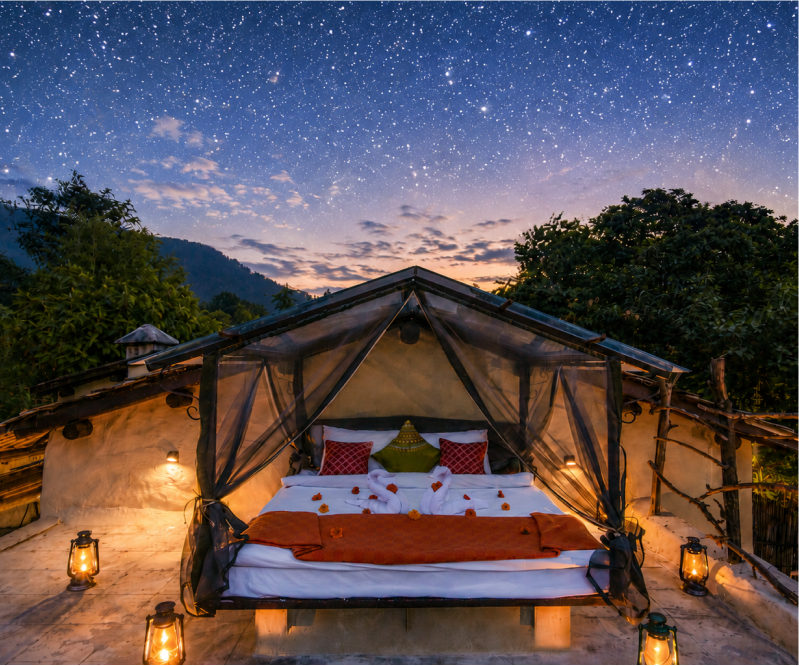
Some villas open into private pools, some invite you to unwind in a Jacuzzi, while others extend the experience outdoors through terraces, hanging beds and the signature Sky Bed beneath the open sky.
Each space offers its own rhythm, its own way of slowing down and its own relationship with the wilderness around it.
The experience may change from villa to villa, but the feeling remains the same: privacy, comfort and the freedom to enjoy Corbett at your own pace.
Because here, luxury is not defined by one feature. It is found in the choice of how you want to stay, unwind and connect with the wild.
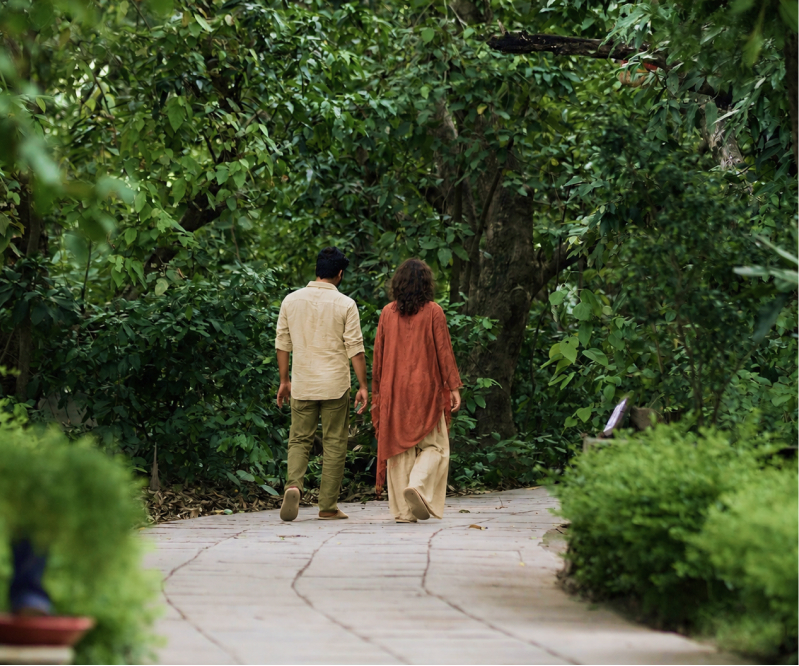
A stay at Paatlidun changes the way you experience Corbett. Your day may begin with the forest, following trails, listening for movement and searching for signs of the wild.
But the experience does not end when you return from the jungle.
You come back to a villa shaped by Kumaoni details, to the blue kholi, the mori, the earthy textures, the artwork inspired by the lunar month, and the comfort of a private pool or Jacuzzi.
That is what makes Paatlidun different. The wilderness continues beyond the safari, finding its way into the architecture, the materials and the way you live within the space.
Here, Corbett is not simply something you go out to explore. It becomes part of the way you stay.
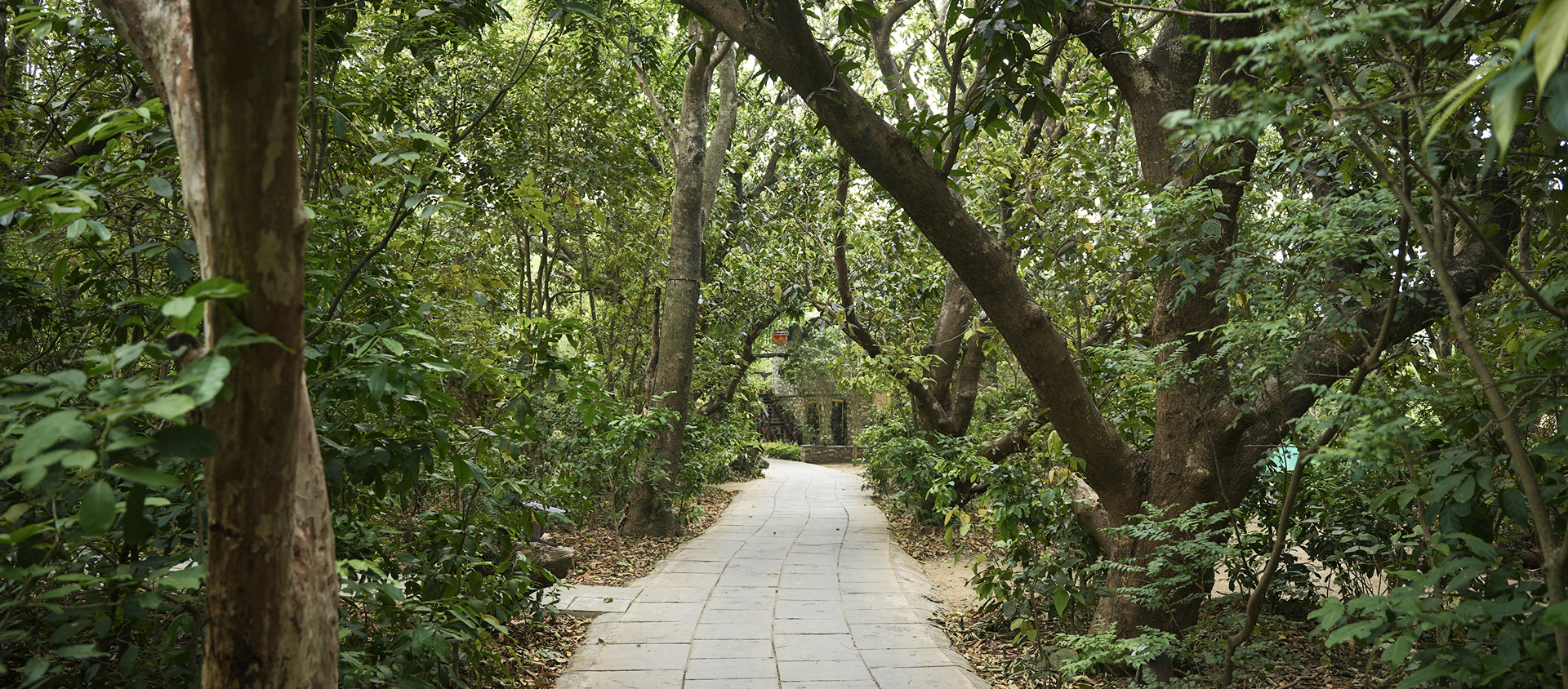

Thoughtfully spaced villas, generous rooms and expansive washrooms create privacy, while bay windows and verandahs invite light, views and stillness.

The Otal is a discreet service window inspired by traditional pahadi homes, allowing personalised service without interrupting your private space.

Nearly 95% of Paatlidun’s team is local, bringing warmth, regional knowledge and authentic stories that deepen every guest's connection here.
Escape to the wilderness and book your next
adventure at our luxurious rooms,
nestled within the heart of the forest.